As we count down to the Fantasy Premier League (FPL) Gameweek 1 deadline, we’re welcoming back our team of guest contributors for 2025/26.
This time, we hear from former FPL champion Simon March, who talks us through his own team.
As German philosopher and committed FPL manager Friedrich Nietzsche once said, “If you gaze long into FPL, FPL also gazes into you.”
More than ever, FPL is asking us what kind of manager we are, and I don’t mean ‘good’ or ‘bad’ but strategically, philosophically and psychologically. Never have the options to play the game ‘your way’ been greater. In the modern iteration of FPL, it is not unreasonable to question whether we all are, in fact, still actually playing the same game any more.
The introduction of defensive contribution (‘DefCon’) points has changed FPL in ways that we are still processing. A new source of points and their predictability relative to other sources of points has not only widened the pool of viable players but, in doing so, also the strategic options available to us.
Of course, within the FPL community in particular, our teams will likely resemble each other’s. That’s partly a result of human nature, partly a result of the World Cup artificially narrowing the available player options, and I’ll save you the suspense and let you know now that you probably won’t find all that many surprises in my current squad either.
But, I have a feeling that where we all go from here could be very different.
Two Paths Diverged

Ultimately, what type of FPL manager you are depends a great deal on your preferred reward types and risk tolerances. Are you the type of manager who likes to chase big hauls, knowing that this will likely necessitate a more dynamic, transfer-centric playing style and boom-or-bust returns, or are you the type of manager who is content with a drip-feed of smaller but more consistent returns?
Naturally, managers can mix strategies but they say that a big part of success is knowing what you’re optimising towards and, ultimately, we will all have to answer that question. We can try to ride the beast or we can try to tame the beast, but we can’t do both.
Chasing big hauls will, almost certainly, offer a higher points ceiling than pursuing consistent returns. Some bright spark will time their moves perfectly, switching from one red-hot player to another, hitting their hauls and avoiding their blanks and, in all likelihood, that person will win FPL.
The rest of us will jump on a form player right before he begins to blank and then sell him immediately before he starts scoring again, all so that we can repeat that process with another player. Anyone who owned Morgan Rogers (£7.5m) (then of Aston Villa, now of Chelsea) last season will likely know what I’m talking about here.
It is for this reason that I’m drawn this season to the other path because, psychologically, I know I can remain more patient with an ‘Elliot Anderson-type’ (£6.5m) player scoring 4-5 points each week than I can a player who blanks for 4-5 Gameweeks and then hauls. Banking free transfers and making more complex multi-transfer moves have become a bigger part of the game now that we can stack five of them. I think this method is more conducive to achieving that.
What I miss in big hauls, I hope I can offset by more regular, moderate scores and through the greater flexibility that more available transfers will give me. That is the plan, anyway.
My Current Squad
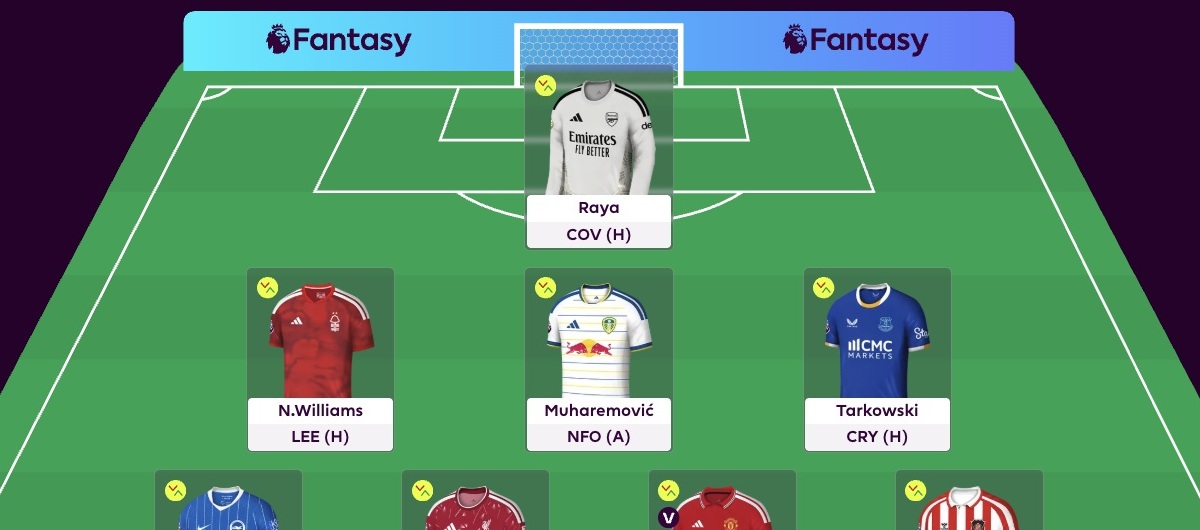
On to the team, I’ll quickly mention from the outset that this draft keeps £0.5m in the bank. I’m not bragging, I just don’t know where to spend it right now.
Goalkeeper

If there’s value in certainty, Arsenal’s David Raya (£6.0m) offers plenty of that. He’s a nailed-on route into the best defence in the league and, while there will be better value goalkeepers out there, picking the right one(s) is a whole different challenge.
Defenders


PakarPBN
A Private Blog Network (PBN) is a collection of websites that are controlled by a single individual or organization and used primarily to build backlinks to a “money site” in order to influence its ranking in search engines such as Google. The core idea behind a PBN is based on the importance of backlinks in Google’s ranking algorithm. Since Google views backlinks as signals of authority and trust, some website owners attempt to artificially create these signals through a controlled network of sites.
In a typical PBN setup, the owner acquires expired or aged domains that already have existing authority, backlinks, and history. These domains are rebuilt with new content and hosted separately, often using different IP addresses, hosting providers, themes, and ownership details to make them appear unrelated. Within the content published on these sites, links are strategically placed that point to the main website the owner wants to rank higher. By doing this, the owner attempts to pass link equity (also known as “link juice”) from the PBN sites to the target website.
The purpose of a PBN is to give the impression that the target website is naturally earning links from multiple independent sources. If done effectively, this can temporarily improve keyword rankings, increase organic visibility, and drive more traffic from search results.