
Brentford v Tottenham Hotspur brings the day’s Premier League action to a close.
The Saturday evening kick-off gets underway at 17:30 BST.
TEAM NEWS
Both clubs stick with the same starting XIs they sent out in pre-season friendlies last Saturday.
The Bees give a Premier League bow to their club record signing, midfielder – and potential defensive contribution magnet – Mamadou Sangare.
Spurs, meanwhile, hand competitive debuts to Andrew Robertson, Jan Paul van Hecke, Marcos Senesi and Sandro Tonali.
Another summer signing, Matheus Fernandes, is on the bench.
Dominic Solanke, James Maddison and Destiny Udogie, who, like Fernandes, have all had injury-affected summers, are also among the substitutes.
LINE-UPS
Brentford XI: Kelleher, Kayode, Ajer, Collins, Lewis-Potter, Jensen, Sangare, Ouattara, Janelt, Schade, Thiago.
Subs: Valdimarsson, Hickey, Henry, Pinnock, Yarmoliuk, Wilson, Anthony, Damsgaard, Schuster.
Tottenham XI: Kinsky, Gray, van Hecke, Senesi, Robertson, Bergvall, Tonali, Gallagher, Moore, Tel, Richarlison.
Subs: Dubravka, Danso, Maddison, Udogie, Fernandes, Solanke, Bentancur, Davies, Williams-Barnett.
LIVE GAMEWEEK PAGE + MATCH CENTRE
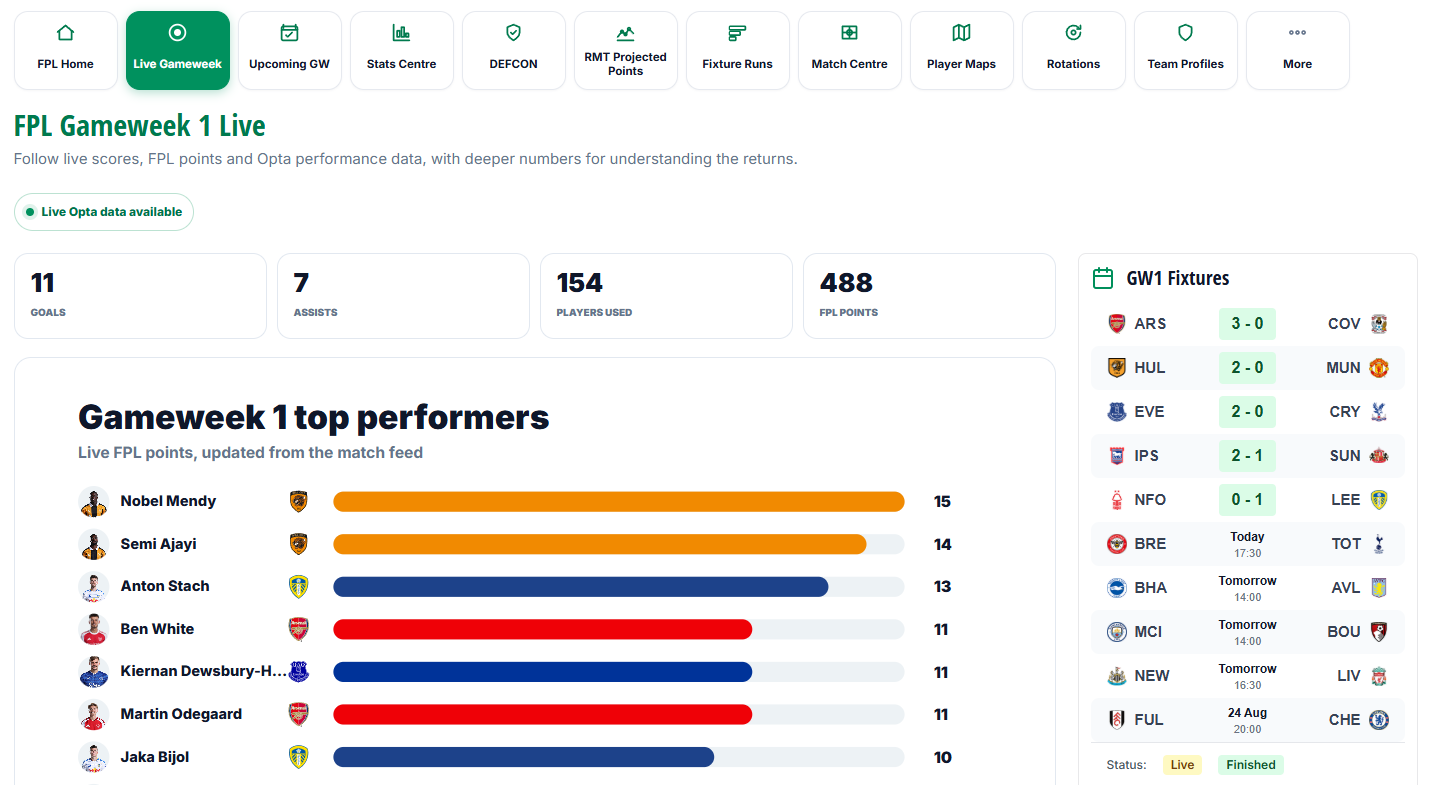
You can follow all the day’s action via the Live Gameweek page, which you can find in the all-new FPL Toolkit section.
Here you can follow the scores, watch the defensive contribution (DefCon) points roll in, see who the leading players are for xG and more as the games play out.
And there’s also the all-new Match Centre to explore.
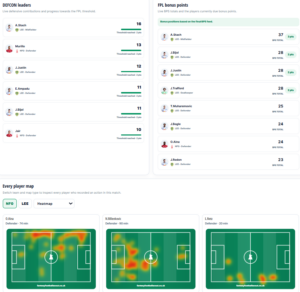
A snapshot of this page can be seen below; it’s basically a condensed version of the one you can find in the Members Area.
PakarPBN
A Private Blog Network (PBN) is a collection of websites that are controlled by a single individual or organization and used primarily to build backlinks to a “money site” in order to influence its ranking in search engines such as Google. The core idea behind a PBN is based on the importance of backlinks in Google’s ranking algorithm. Since Google views backlinks as signals of authority and trust, some website owners attempt to artificially create these signals through a controlled network of sites.
In a typical PBN setup, the owner acquires expired or aged domains that already have existing authority, backlinks, and history. These domains are rebuilt with new content and hosted separately, often using different IP addresses, hosting providers, themes, and ownership details to make them appear unrelated. Within the content published on these sites, links are strategically placed that point to the main website the owner wants to rank higher. By doing this, the owner attempts to pass link equity (also known as “link juice”) from the PBN sites to the target website.
The purpose of a PBN is to give the impression that the target website is naturally earning links from multiple independent sources. If done effectively, this can temporarily improve keyword rankings, increase organic visibility, and drive more traffic from search results.