By Eduard Bănulescu
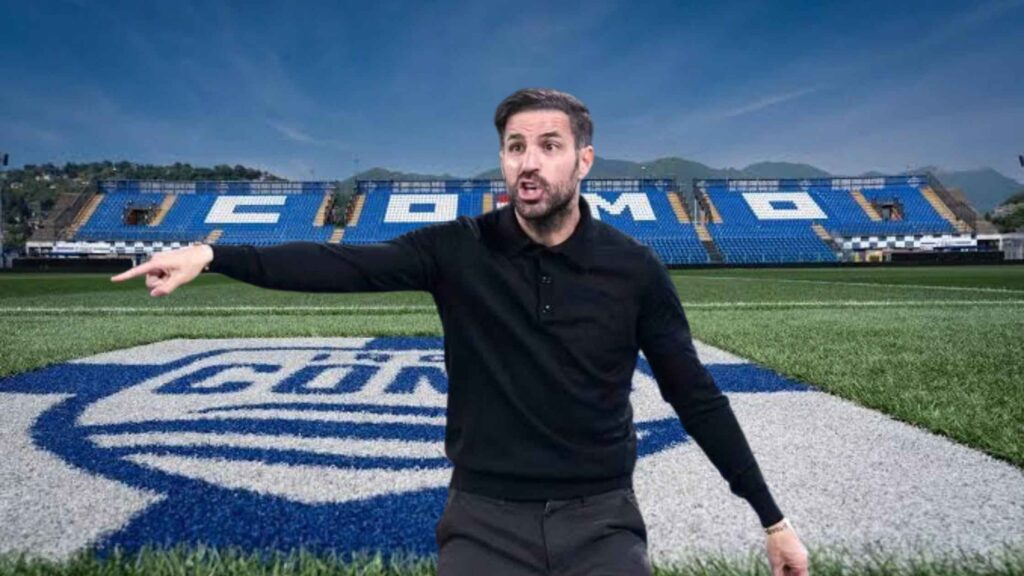
Well, the stereotype is true, then, huh? Become an important player for FC Barcelona and in the Spain national team, and you’re bound to become a manager, right? Cesc Fàbregas is proving that there might be truth to that. But he’s also proving he might be more than just an ordinary manager.
Como is a team that everybody is talking about. The small Northern Italian team hasn’t just shown its strength in the Serie A. It seems to be doing just as well against international opposition.
But what are the tactics that have made Como such a powerhouse in such a short time? And where is this likely to all lead?
After a decade of writing football tactics articles, I know I don’t have all the answers, but I can feel confident about guessing some of them.
If that’s made you think of football managers, why not take your skills over to FootballCoin, a daily fantasy football game with all of the world’s best leagues. You can even win prizes!

Career Prior to Managing Como
It shouldn’t have worked so easily for Cesc Fabregas in management. I didn’t expect it, certainly. When he arrived at Como in 2022, many had forgotten he was even playing. When he was made interim manager in 2023, few expected this appointment would last longer than a few weeks.
Cesc Fabregas had an amazing playing career. He was the original “False Nine” of the Guardiolissima era. He was Arsenal’s youngest goalscorer and, eventually, played 350 Premier League games. He was part of FC Barcelona’s stellar 2011-2014 side. And he won the World Cup and European Championship (twice) for Spain. What more could you ask for?
Still in his late 30s, he was appointed manager of Como. It seemed like a desperate move from a club facing relegation. In his first full-time season as manager of the club, he guided it to a historic fourth-place finish and a spot in the Champions League.
Just what are the tactics that have ensured this lightning-fast success?
Tactical Philosophy
They say that there’s a bit of Cruyff and Guardiola in every former Barcelona player who becomes a manager themself. In Fabregas’s case, there may be some truth to that.
In my opinion, the main tenet of that style is “controlling possession leads to opportunities.”
Como 1907 want the ball. Fabregas wants his players to play short, focused passes. He may play with two pivots, but all of his midfield players need to be able to play any midfielder’s role.
Those passes are meant to create superiority, a 3 vs 2, where the ball can quickly be advanced towards the opposition’s goal.
The team builds from the back, and players rotate positions to ensure that they’re covered in case possession is lost.
Fabregas encourages individual skill provided that it fits into this set-up. Midfielders will look for the killer through pass, and the attackers (and sometimes the wing-backs, as well) will move into channels.

Formations and Adaptability
Listen, in my opinion, any Barcelona-like formation, at its core, is a 4-3-3.
However, this is a versatile formation, and in the case of Como, when in possession, this resembles more of a modern 4-2-3-1.
There are nearly always four players ready to defend the back line. However, due to constant rotations, Como can switch to a 4-4-2, 4-2-4 and, yes, 4-3-3 when attacking.
Fabregas’ Como in Defense
Most young managers would like their teams to press consistently and with intent. What makes Cesc Fabregas an exception? If you ask me, it’s that Como not only does this, but succeeds at it. Throughout most of last season, Como led Serie A in terms of pressing.
Como plays in a flat four. Como tends to defend in a 4-1-4-1 formation. Nearly always, the team plays with a high line. The central defenders will often be found around the mid-line, with the full-backs being the players that give the team its width.
Still, this isn’t an all-out pressing approach. Rather, the team likes to move the ball to the flanks. Here, Diao and Baturina, the wingers, will work to help the full-back win possession.
Meanwhile, the centre of the pitch stays jammed up with players. It should be noted that Jacobo Ramón’s tackles won and Luis Milla’s interceptions have been integral this season to Como’s tactical plans.
Como’s Build-Up Play
The key to Como’s growing success has been Fabregas’ philosophy of having players switch positions, or creating surprising numerical advantages in the final third. To achieve this, the manager has put much of his focus into developing the positional awareness of his midfield players.
Como’s builds from deep. Ramon and Trevor Chalobah are defenders comfortable with the ball.
Meanwhile, the midfield trio of Maximo Perrone, Lucas da Cunha and Nico Paz are just as comfortable under pressure. The midfield trio tends to drop back to assist the build-up.
Fabregas likes his players to control possession and soak up pressure. The goal is to look for the right avenue to launch a direct ball forward.
But how do attackers get at the end of those passes?
Como in Attack
Fabregas wants options in attack. Unlike many teams in the past couple of seasons, Como doesn’t merely rely on its striker, Tasos Douvikas’s finishing.
When those vertical passes are launched, Fabregas wants his attacking midfielders, Assane Diao and Matin Baturina, moving into channels.
It’s also not uncommon for Nico Paz, the team’s playmaker, to switch places with the main striker, forcing the opposition defenders to make a quick decision of who to track.
That’s how, on the counterattack, Como will tend to play in a formation resembling a 4-2-4. With four attacking players making runs forward, it becomes difficult for opposing defenders to hold their ground.
This is why last season, the burden of scoring goals was shared pretty evenly. While Douvikas was the main scorer with 14, Paz scored 12. Baturina and Cunha each managed 6. And even central defender Marc-Oliver Kempf contributed 4 goals.
And while Paz has been the team’s most important player this season, Perrone and de Cunha’s individual abilities have greatly increased. They both average 93% passing success. Both have become the sorts of players capable of seamlessly connecting defence to attack.
What’s Next for Fabregas and for Como?
Cesc Fabregas is one of the most hyped managers in football at the moment. What happens to these types of managers? Typically, they end up at Real Madrid or one of the top Premier League teams. Usually, they end up having to entirely restructure a failing big-name club.
Como, on the other hand, is on the rise and has managed to maintain its pace. It would be a mistake for Fabregas to leave just yet. It would also be surprising if we were to find him managing Como in five years’ time.
Both the manager and the club now need to do the best with the opportunity that they have been given. Let’s just hope we can see more of this brand of exciting football for a while, at least.

PakarPBN
A Private Blog Network (PBN) is a collection of websites that are controlled by a single individual or organization and used primarily to build backlinks to a “money site” in order to influence its ranking in search engines such as Google. The core idea behind a PBN is based on the importance of backlinks in Google’s ranking algorithm. Since Google views backlinks as signals of authority and trust, some website owners attempt to artificially create these signals through a controlled network of sites.
In a typical PBN setup, the owner acquires expired or aged domains that already have existing authority, backlinks, and history. These domains are rebuilt with new content and hosted separately, often using different IP addresses, hosting providers, themes, and ownership details to make them appear unrelated. Within the content published on these sites, links are strategically placed that point to the main website the owner wants to rank higher. By doing this, the owner attempts to pass link equity (also known as “link juice”) from the PBN sites to the target website.
The purpose of a PBN is to give the impression that the target website is naturally earning links from multiple independent sources. If done effectively, this can temporarily improve keyword rankings, increase organic visibility, and drive more traffic from search results.